
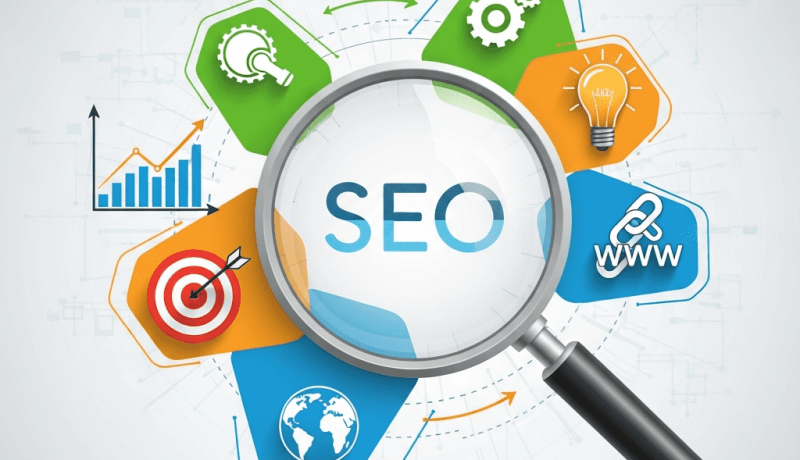
SEO stands for Search Engine Optimization. It is the process of improving your website so that it appears higher in search results on search engines like Google when someone searches for something related to your business, service, or content. Let’s make it simple. Imagine you have a website, but no one knows it exists. You publish great content, offer useful services, or sell quality products, but if your site does not appear on Google, people will not find you. This is where SEO Google becomes important. SEO helps Google understand what your website is about and decide when to show it to users.
A well-optimized SEO website is not just about adding keywords everywhere. It is about creating helpful content, using clear headings, improving page speed, making the site mobile-friendly, and giving users a smooth experience. Google wants to rank websites that genuinely help people, not just websites trying to manipulate rankings. SEO marketing is different from paid advertising. Instead of paying Google to show your website, you earn your position by providing value and properly optimizing your content. It focuses on attracting the right audience, people who are already searching for what you offer.
What Is SEO, and How Does It Work?
SEO (Search Engine Optimization) is the process of helping your website appear on Google when people search for something related to your topic, product, or service. It works by making your website clear, useful, and easy for search engines to understand.
Let’s break it down in a very simple way.
Think of Google as a huge digital library. Every website is like a book. When someone types a question into Google, it quickly scans millions of “books” and chooses the best ones to show on the first page.
SEO helps your website become one of the best books.
Here is how SEO works step by step:
1. Crawling
Google uses special programs called bots to visit websites. These bots read your pages and collect information.
2. Indexing
After reading your website, Google stores it in its database. This is called indexing. If your page is not indexed, it will not appear in search results.
3. Ranking
When someone searches, Google compares many indexed pages and ranks them. It checks things like content quality, keyword relevance, page speed, mobile-friendliness, and user experience.
Why is SEO important in digital marketing?
SEO is important in digital marketing because it helps your business get noticed by the right people at the right time. It supports your entire online strategy by bringing organic traffic, improving visibility, and building brand authority.
Organic Traffic
Organic traffic means people find your website naturally through search results, not through paid ads. When someone searches on Google and clicks on your website, that visit is organic. These visitors are usually serious. They are already looking for something specific, and if your website gives them the right answer, they are more likely to trust you or even become customers. The best part is that you do not have to pay for every click.
Visibility
If people cannot see your brand online, they cannot choose you. SEO helps your website appear on the first page of search results. The higher your website ranks, the more people notice your business. When users repeatedly see your website in search results, your brand becomes familiar and recognizable.
Better User Experience
Good SEO improves website speed, mobile-friendliness, and content structure. This makes it easier for visitors to find what they need.
Builds Trust and Credibility
People trust websites that appear on the first page. Strong SEO signals that your website is reliable, relevant, and useful.
Brand authority websites
Those who rank higher are often seen as more trustworthy. When your content is helpful, clear, and well-structured, people start to see you as an expert in your field. Over time, this builds confidence in your brand.
Long-Term Results:
SEO is not instant, but it gives lasting benefits. Once your website ranks well, it can continue bringing traffic for months or even years.
SEO vs Paid Marketing (Search Engine Marketing)
Factor | SEO (Search Engine Optimization) | Paid Marketing (Search Engine Marketing) |
Definition | Improving your website to rank naturally in search results | Paying for ads to appear at the top of search results |
Traffic Type | Organic traffic (free clicks) | Paid traffic (pay per click) |
Cost Structure | No cost per click, but requires time and effort | You pay for every click or impression |
Time to See Results | Slow and steady, takes months | Fast results, can start immediately |
Long-Term Value | Long-lasting if maintained properly | Stops when you stop paying |
Trust Level | Often seen as more trustworthy by users | Some users skip ads and prefer organic results |
Click-Through Rate | Higher for informational searches | Higher for commercial and high-intent keywords |
Strategy Focus | Content quality, keywords, technical optimization, backlinks | Bidding strategy, ad copy, targeting, and budget management |
Sustainability | Strong long-term growth | Short-term visibility |
Types of SEO (Search Engine Optimization) for Beginners
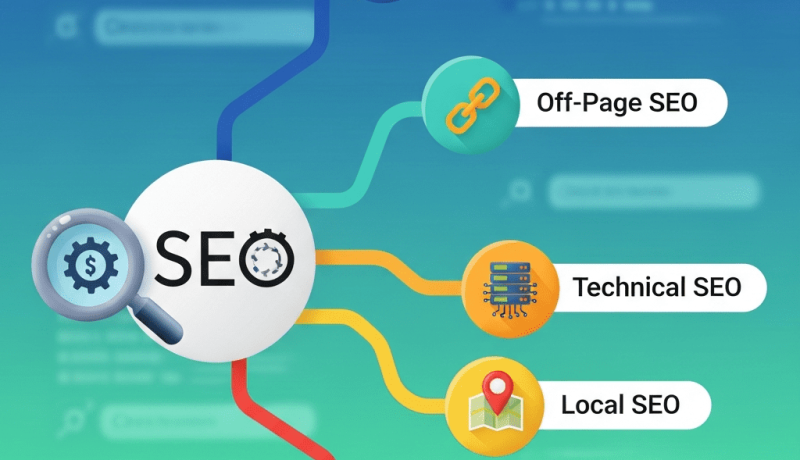
SEO is not just one single process. It has different types, and each type plays an important role in helping your website perform better in search results on Google. Understanding these types helps you build a complete and balanced SEO strategy.
1. On-Page SEO
On-page SEO focuses on improving things directly inside your website. This includes writing helpful content, using proper headings, adding keywords naturally, optimizing images, and making sure your pages are easy to read. The main goal is to help both users and search engines understand your content.
- Title Optimization: Page titles should be clear, meaningful, and include important keywords naturally. Good titles help both users and search engines understand the topic.
- Content Quality: Content should be helpful, easy to read, and solve user problems. Writing for people first and search engines second is the best practice.
- Internal Linking: Connecting your pages through links helps visitors navigate easily and allows search engines to crawl your website better.
- Image SEO: Images should be optimized by using proper file names, alt text, and compressed sizes so pages load faster.
- Video SEO: Videos should have good titles, descriptions, and relevant keywords so they can appear in search and video results.
2. Off-Page SEO
Off-page SEO refers to activities done outside your website to improve its ranking and online reputation on Google. While on-page SEO focuses on content inside your website, off-page SEO focuses on building trust, authority, and popularity across the internet. One of the most important parts of off-page SEO is backlinks. Backlinks are links from other websites that point to your website. When trusted and relevant websites link to your content, search engines consider your site more reliable and valuable. However, quality matters more than quantity. A few links from trustworthy sites are better than many low-quality links. Another key factor is authority signals. These include social media mentions, brand searches, online reviews, and website references. When people talk about your brand online, it helps search engines understand that your website is popular and credible. Off-page SEO also helps increase website exposure and drives more organic traffic. It works like building your website’s reputation in the online community.
3. Technical SEO
Technical SEO focuses on improving the technical structure of your website so that search engines can crawl, understand, and index your pages properly on Google. Unlike content SEO, technical SEO works behind the scenes to make sure your website functions smoothly and efficiently. One of the main goals of technical SEO is speed optimization. A fast-loading website provides a better user experience because visitors do not like waiting for slow pages to open. Search engines also prefer websites that load quickly. Another important factor is mobile optimization, since many users browse websites using mobile devices. A website should automatically adjust to different screen sizes and work smoothly on phones and tablets. Technical SEO also includes improving website security, using proper URL structure, fixing broken links, and making sure search engines can crawl and index pages without problems. Using structured data and optimizing website code can also help search engines understand your content better.
4. Local SEO
Local SEO is a type of search engine optimization that helps businesses appear in location-based search results on Google. It is especially important for businesses that serve customers in a specific city or area. When someone searches for services or products near them, local SEO helps the business show up in those results. One important part of local SEO is business listing. This means registering your business on online directories so people can easily find your contact information, address, and services. Accurate business information across the internet also helps build trust and improve search performance. Map visibility is another key factor in local SEO. When your business location appears on maps, customers can quickly understand where you are and how to reach you. This is very useful for restaurants, shops, hotels, and local service providers. Creating and managing a Google Business Profile is also essential. It allows you to display business details, working hours, photos, and customer reviews. Regular updates and positive reviews help improve local search visibility and attract more nearby customers.
SEO Tools for Beginners
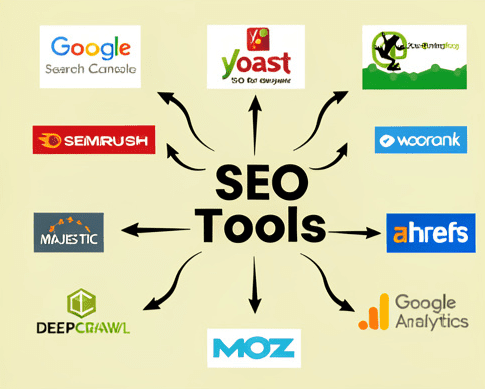
SEO tools are very helpful for beginners who are starting search engine optimization on Google. When you are new to SEO, it can be difficult to understand what is working on your website and what needs improvement. SEO tools simplify this process by providing clear data and useful insights. These tools help you analyze website performance, keyword opportunities, and content quality. For example, you can see how many visitors are coming to your site, which pages attract the most traffic, and how users interact with your content. This information helps you understand whether your website is meeting user expectations. Keyword research tools allow you to find what people are actually searching for online. Instead of guessing topics, you can create content based on real search demand. Website audit tools identify technical issues like slow loading speed, broken links, or mobile usability problems. Fixing these improves both user experience and rankings. Content optimization tools also help improve readability and proper keyword placement. Beginners should start with free tools and focus on learning from the data. When used correctly, SEO tools help you make smarter decisions and build a strong foundation step by step.
Free SEO Tools
Free SEO tools are a good starting point for learning SEO. They help you analyze your website without any cost. Tools like Google Search Console and Google Analytics help track website traffic, indexing status, and user behavior. Free tools are enough for beginners who want to practice SEO basics.
Website Audit Tools
Website audit tools help you check technical and on-page SEO issues. Semrush, Moz, Ahrefs, and Screaming Frog tools analyze page speed, broken links, mobile usability, and metadata problems. Regular website audits help improve search performance and user experience.
Keyword Research Tools
Keyword research tools help you find what people are searching for online. These tools show search volume, competition level, and related keywords. Choosing the right keywords is important because it helps your content reach the right audience.
Can ChatGPT Do an SEO Audit
ChatGPT can help analyze content structure, suggest SEO improvements, and explain SEO concepts. However, it cannot perform live technical audits of websites or access real-time data from search engines like Google Search Console. It is best used as a supportive tool for learning and content optimization guidance.
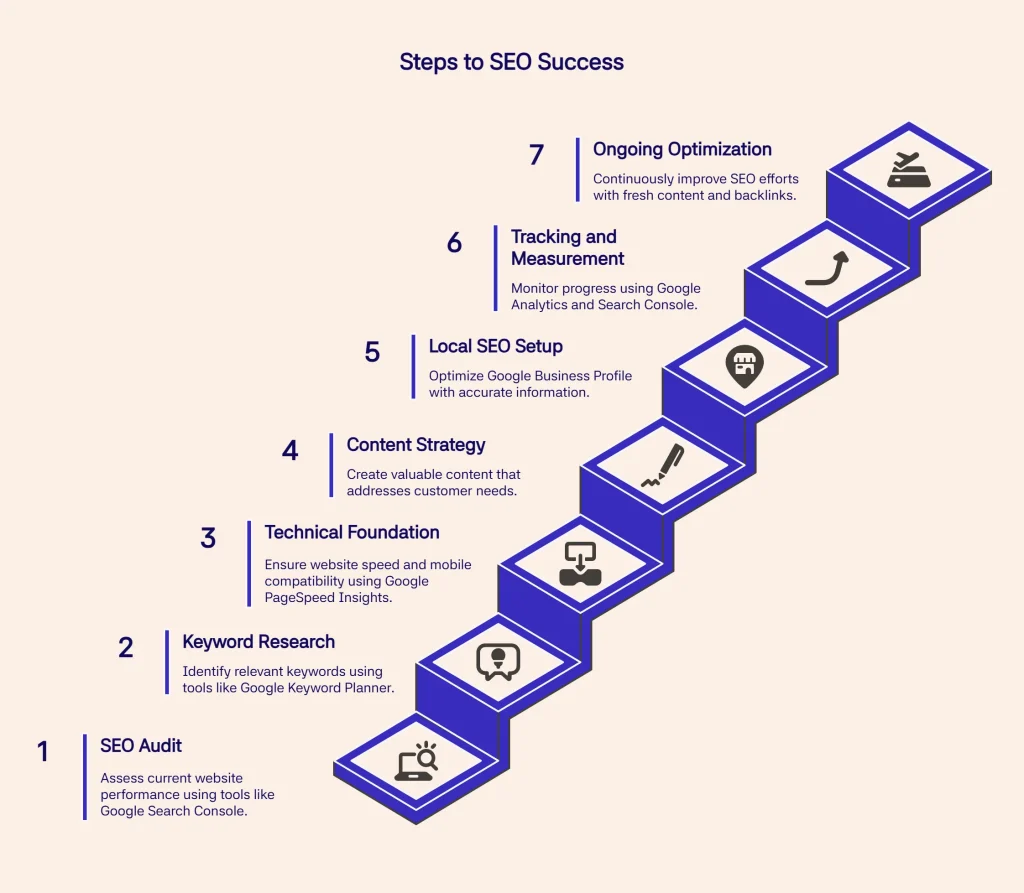
How to Start Learning SEO for Beginners
1. Learn How Search Engines Work
Start by understanding how Google finds, reads, and ranks websites. SEO is mainly about helping search engines and users find helpful content easily.
2. Study Keyword Research Basics
Learn how to find the right keywords people are searching for. Focus on search intent, long-tail keywords, and natural keyword placement inside content.
3. Practice Writing SEO-Friendly Content
Try creating simple articles that are easy to read and useful for users. Use proper headings, short paragraphs, and relevant information.
4. Learn On-Page SEO Techniques
Understand title optimization, image optimization, internal linking, and meta description writing to improve page performance.
5. Understand Basic Technical and Off-Page SEO
Learn website speed optimization, mobile friendliness, and backlink basics to build website authority.
Difference Between On-Page and Off-Page SEO
Factor | On-Page SEO | Off-Page SEO |
Definition | Optimization done inside your website pages | Activities done outside your website |
Main Focus | Content quality, keywords, and page structure | Building reputation and authority |
Control | You have full control | Depends on external websites and users |
Key Elements | Title optimization, image SEO, internal linking | Backlinks, social signals, online mentions |
Purpose | Help search engines understand your content | Improve website trust and popularity |
Time to Show Results | Faster compared to off-page SEO | Usually takes more time |
Example | Writing good content for Google search results | Getting links from other trusted websites |
Keep learning SEO
SEO is a long-term process that requires patience and continuous improvement. You cannot expect instant results because search rankings on Google depend on many factors like content quality, website performance, and user experience. Content quality is one of the most important parts of SEO. Writing helpful, clear, and easy-to-read content helps users find answers to their questions. Always focus on creating content that solves real problems rather than just adding keywords. It is also important to follow search engine algorithm updates because SEO rules change over time. Keeping your website updated with best practices helps maintain and improve rankings. If you are learning SEO, keep practicing regularly. Try optimizing your own content, analyzing websites that rank well, and improving your SEO knowledge step by step.
👉 Learn more about SEO techniques.
👉 Practice writing SEO-friendly content.
👉 Build content clusters around your main topic
Frequently Asked Questions About SEO
Q1: What does SEO mean?
SEO means Search Engine Optimization. It is the process of improving your website so it can rank higher in search results on Google. The main goal of SEO is to help people find your website easily when they search online.
Q2: How is SEO used in marketing?
SEO is used in digital marketing to attract organic traffic, increase brand visibility, and build trust. Instead of paying for ads, SEO helps your website appear naturally in search results.
Q3: How do I do SEO on my own
You can start SEO by learning keyword research, writing helpful content, optimizing titles and images, improving website speed, and building basic backlinks. Practice and consistency are important.
Q4: Is SEO free or paid?
SEO itself is free, but you may spend money on tools, content creation, or professional services. You can also do basic SEO without spending money.
Q5: How much does SEO cost monthly?
SEO cost depends on service quality and project size. Some businesses spend a small amount for basic optimization, while larger businesses invest more for professional SEO management.
Q6: What are SEO tools
SEO tools are software used to analyze websites, find keywords, check performance, and improve optimization. Examples include analytics tools and keyword research tools.